
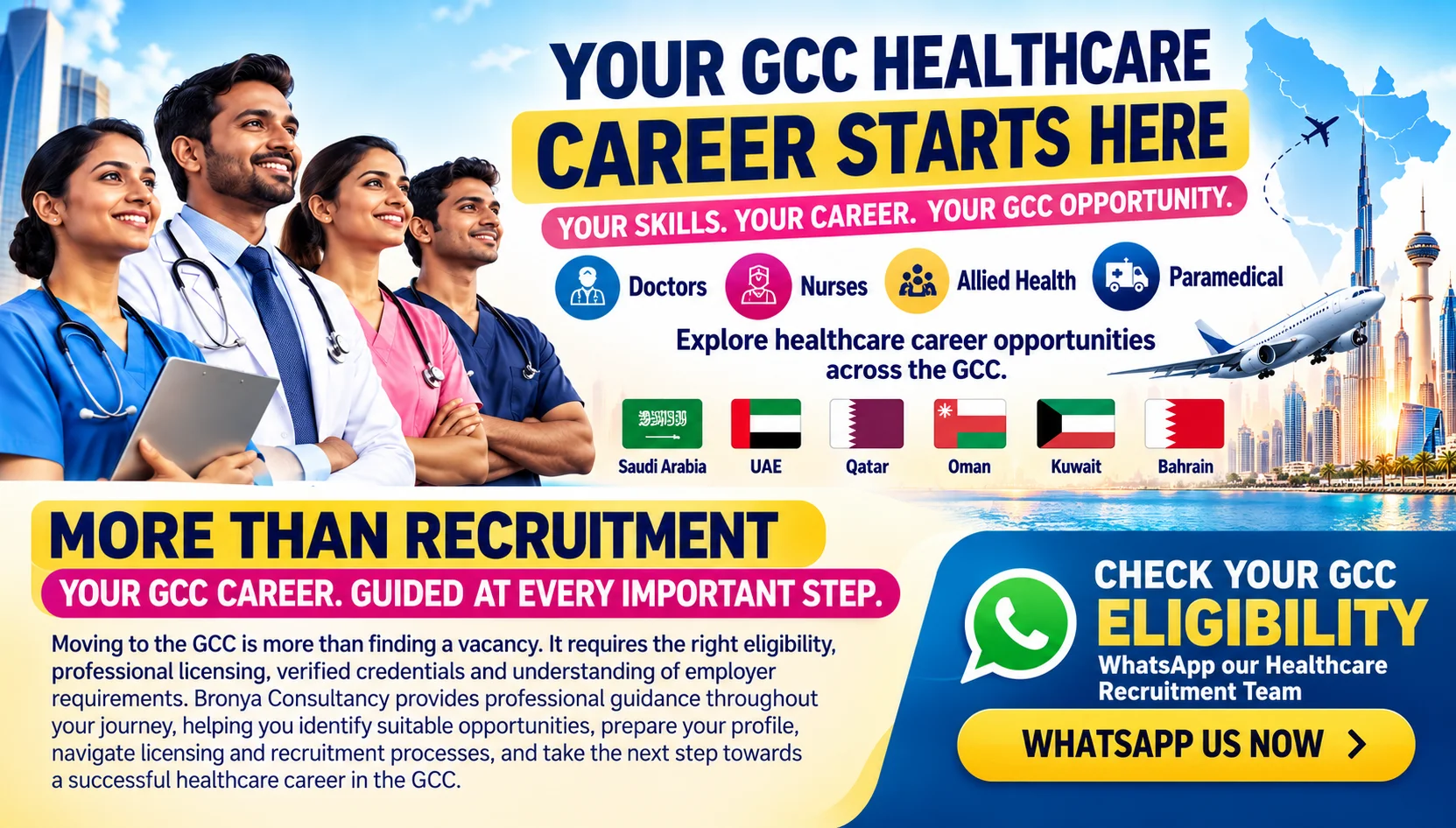
For Doctors

Your Experience.
Your Next GCC Opportunity.
Take your medical career to the GCC with opportunities aligned with your specialty, qualifications and professional experience.
For Nurses

Career Beyond Borders
Explore GCC nursing opportunities across hospitals, clinics, specialist centres, home healthcare and other healthcare organisations.
For Allied Health
Professionals

Have A Place In Global
Healthcare
Explore GCC opportunities for professionals with specialised clinical, diagnostic, therapeutic and technical expertise.
For Paramedical
Professionals

Skills To The GCC
Explore opportunities across hospitals, clinics, emergency services and specialised healthcare environments.
Start With Your Profile
Profession + Qualification
+ Experience
Why Choose Bronya?
Healthcare-Focused. GCC-Focused. Career-Focused.
Profile-Based Approach
We understand your qualification, specialty, experience and career profile before identifying suitable GCC opportunities.
Strong GCC Focus
We focus on healthcare opportunities across Saudi Arabia, UAE, Qatar, Oman, Kuwait and Bahrain.
Structured Process
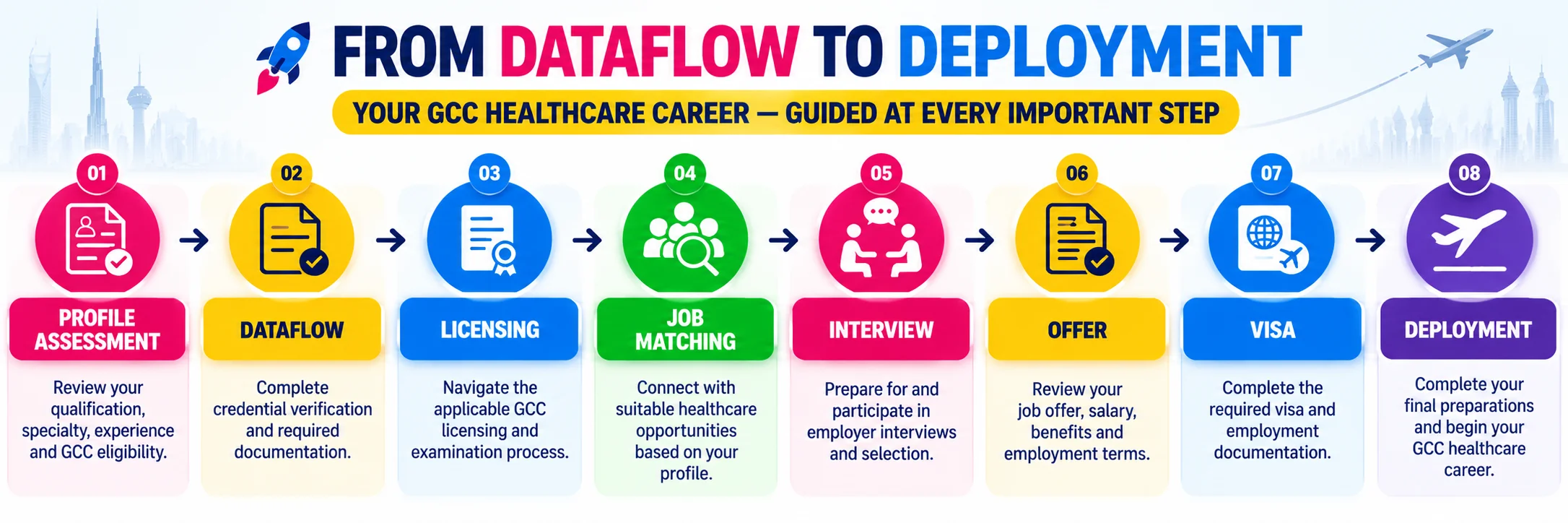
From profile assessment to deployment, every stage is approached with clear and organised guidance.
Licensing & Compliance Guidance
Understand the relevant professional licensing, credential verification and documentation requirements for your destination.
Opportunity Matching
Explore relevant positions based on your profession, specialty, experience and employer requirements.
Professional Recruitment Support
Receive guidance through employer communication, interviews, selection and offer coordination.
Beyond Job Placement
Our support extends beyond selection, helping you navigate the visa, deployment and pre-departure stages of your GCC career.

Government Of India – MEA Licensed
Licensed by Government of India – Ministry of External Affairs for overseas recruitment services.